
Diutinus bees
How do we talk about beings governed by the light as we move in the darkness?

*If you want to hold these moments with me, become a paid Setteuarciate member and read the full stories from the artists-in-residency series beginning April 2026.*
My life is punctuated by thinking about relationships and chasing sunlight.
Now I am asking myself, what do I want people to know about bees and winter?
Winter is a time to draw inward.
The Italian honey bee (Apis mellifera) evolved in a temperate climate so winter is nothing new for the colony.
During the spring and summer months, the population of a honey bee colony reflects the fields of flowers in bloom. The colony involves around 50,000 bees; whereas, in the winter the colony ebbs to 10,000 bees.
The lifespan of a honeybee changes.
When getting curious about a bee’s lifespan you must first ask – is this a summer bee or a diutinus bee?
Diutinus is a Latin word meaning “long-lasting” or “long”. In the context of honey bees, it refers to the “winter bees” or “long-lived bees” that emerge in the fall and sustain the colony through the winter.
Summer bees live for around 40 days. Winter bees live for 120 days.
I spent the spring likening the practice of grafting citrus trees to courting romantic relationships in rural spaces – it was in this season that I became interested in the concept of lastingness. How beautiful that diuntinus bees are bringing me deeper into conversation with lastingness.
My desire to be in a romantic relationship most mirrors the relationship that a beekeeper has with her hive.
Beekeepers visit the hive at least once every two weeks. This spacing between visits allows the beekeeper just enough time to see if the colony still has a queen bee. If the hive is not “queen-right,” a beekeeper looks for signs and guides the colony forward in their choice.
The relationship between beekeeper and bee is governed by choices.
Semi-domestication.
A honeybee colony settles in a hollow body and collectively makes decisions to stay or go. The colony is still a sovereign being— capable of leaving.
The colony’s quality of life is meant to be improved by the presence of a beekeeper, this is the delicate dynamic of semi-domestication. The beekeeper must respect and remember if she is not attuned to the colony’s needs the colony will protect itself. We know bees have memory. If too many transgressions are burned in the collective memory, the colony will take her resources and leave.
The choices that the beekeeper makes will ultimately inform the colony’s actions.
Stay or swarm.
This arrangement to respect boundaries gives us time to check in and grow close but not compromise the urge to expand and grow.
Winter is a mysterious moment shared between beekeeper and beehive. Although we have ample anecdotal evidence and scientific research, humans still do not quite understand the factors regulating overwintering behavior of the Italian honeybee.
What we do know is that bees are almost exclusively diurnal or active during the day. The Italian honey bee has biological responses to the change in duration of light and darkness in a 24-hour cycle. Days are darker and there is less forage available in winter. The small cluster of diutinus bees have unique physiological features that contribute to their ability to thermoregulate and facilitate spring build-up as the season transitions to spring.
A honeybee born in the spring or summer will go through a series of growth spurts mediated by hormones. Each growth spurt informs the type of “job” the bee will be assigned in the colony over the span of 40 days. There is only one exception, a few bees will serve in the queen’s court relaying information about the queen to the rest of the colony while cleaning and feeding the queen. No one bee is special, she will do all the same jobs that her sisters do: moving from housekeeper, to nurse, to architect and then to forager. The transition from architect to forager is critical because it is the moment that marks a bee’s exit from the hive. Once she learns to fly at two weeks old, she loses the physical ability to produce beeswax. With the gift of flight her lifespan is variable because she is not always in the safety of her beehive. The forager bees have different tasks depending on the needs of the colony — she could be a scout bee, an undertaker bee or a guard bee.
During cold periods, worker bees produce ethyl oleate, a pheromone that slows the maturation of nurse bees, so reducing their transition to foragers. Most diutinus bees are suspended in the nurse bee format.
Narrated by a human, winter in the hive is romantic. The diutinus bees form a small cluster to protect the queen, indulge in honey reserves, take turns resting, hold each other in an embrace and vibrate to keep the hive a balmy 36°C/95°F. Wouldn’t we all like to be doing just that in the winter?
When the light and temperature increase in the spring then the diutinus bees stop producing ethyl oleate and encourage the queen to lay more eggs.
A new cycle begins again.
Flowers bloom. Honey processed in the hive is drawn into beeswax. Nectar and pollen fill the fresh beeswax. Swarms leave the hive.
Beekeepers begin a new cycle.
She co-creates with the bees, offering the hive space and harvesting honey. The practice of harvesting honey gives the beekeeper precious beeswax caps that she can render into candles. Then she lights her home in the dark of winter.
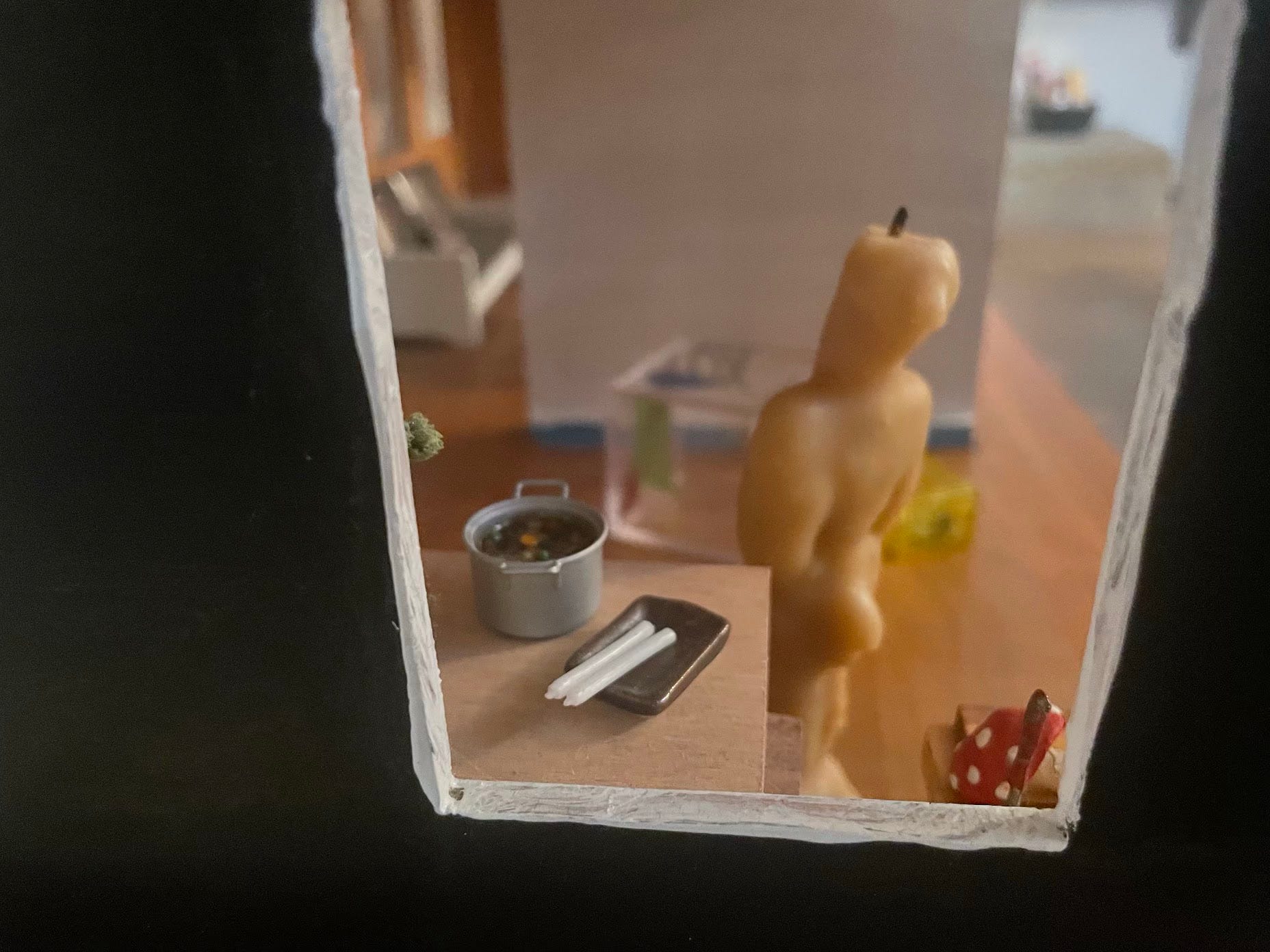
I like beekeeping because it teaches me to use what I have. I get creative and focus on what I have right in front of me, rarely looking outside of that relationship for answers. I know that the answers are negotiated in the choices we make.
Relationships are a series of choices. If we choose to be in a relationship we agree to be curious and grow. Nothing is permanent but if two beings choose to stay present through change and the unknown, it is possible to endure— lastingness.
May we all use relationships to awaken and shine light where there is darkness.
Such a beautiful community of unity.
May your relationships be as warm and sweet as the work of the Diutinus bee!